



SALE PROHIBITED TO PERSONS UNDER 18 - FREE SHIPPING FROM €40 (Mainland Spain only - Max. 25 Kg)

 Envio GRATISA partir de 40 € (Solo península) y max. 25 Kg. 48/72 hs.
 Pago seguroPago seguro SSL (Secure Sockets Layer): BIZUM, Tarjetas de crédito, Criptomonedas
 Política de devoluciónSi tienes dudas, por favor, lee la Política de Devolución
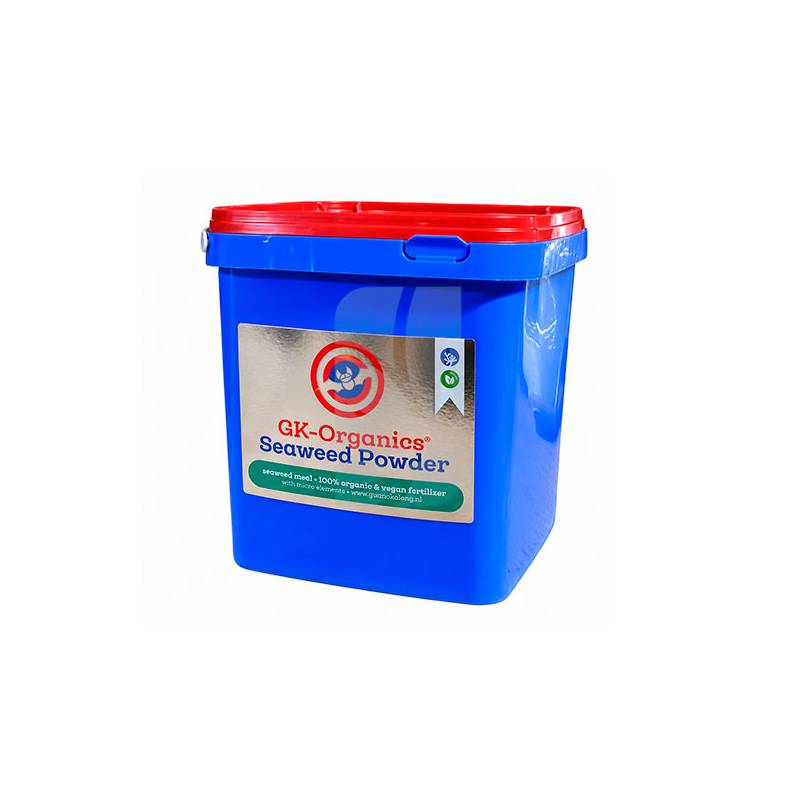
The five-liter format is practical when you prepare soil in batches throughout the season. You can dedicate part to spring pots and reserve the rest for transplants or the vegetable garden. For example, if you usually work with 75-liter substrate bags, you will need half a liter of powder per bag. With the full container, you will have enough for ten bags at that same ratio. This equivalence makes purchasing easier when you already know the volume of soil you are going to use.
To prepare soil for pots and planters before planting, add 100 ml of powder for every 15 liters of substrate. You can use two 50 ml measures for each 15-liter mix. The table shows the volume of product corresponding to different amounts of soil.
| Substrate volume | Amount of Seaweed Powder |
|---|---|
| 15 liters | 100 ml |
| 30 liters | 200 ml |
| 75 liters | 500 ml |
| 150 liters | 1 liter |
| 750 liters | 5 liters |
To add the powder directly to the soil, the guideline is 1 liter for every 5 to 10 m², equivalent to 100–200 ml per square meter. Thus, a bed 2 meters wide by 5 meters long has 10 m² and requires between 1 and 2 liters. If you are going to transplant into an outdoor pot, use the guideline for pots and calculate the volume of new soil that will surround the root ball.
The raw material of GK-Organics Seaweed Powder is Ascophyllum nodosum, a brown seaweed. The product is 100% vegan and has an NPK 1-0-1 profile. In addition to the nitrogen and potassium provided by this profile, Guanokalong highlights the microelements and natural growth hormones present in the seaweed. The composition fits into nutrition programs that seek to supplement soil fertilization with marine-based ingredients.
It is an organic powdered seaweed amendment that you can mix with new soil or add to the top layer of an established planting. The five liters express the volume of dry product. Therefore, to prepare a 75-liter substrate mix, simply measure 500 ml of powder in a graduated jug and spread it directly over the soil.
The seaweed powder helps the soil retain moisture between waterings. This property is especially useful in terrace planters, where sun and wind can dry the surface while the interior still retains water. Guanokalong also links the natural compounds in the seaweed to the development of the root system. By adding the powder before transplanting, these components are distributed throughout the soil that the roots will be able to explore as they grow.
For a new planting, pour part of the substrate into a bucket or wheelbarrow and add a portion of the pre-measured powder. Add the rest of the soil and product in several layers. Mix from the bottom until you get a homogeneous mixture, fill the containers, and carry out the planting watering. This method makes distribution easier when working with large bags.
If the plants are already in the ground, spread the powder over the free surface and incorporate it with a light raking. Work carefully around stems and visible roots. Water afterwards and adjust subsequent waterings to the moisture you find below the surface. For new applications, follow the instructions on the package and take into account the contributions made during soil preparation.
At Hydroponics Blanes you can buy the five-liter format within the Guanokalong fertilizers range. If you compare cheap fertilizers for a plantation of a certain size, divide the price of the container by ten to find out the cost of the seaweed contribution per 75-liter bag of soil. At growshopweb.com you will find a Grow Shop in Spain with discreet shipping and service from your trusted Grow Shop to answer questions about quantities.
A terrace with planters and a vegetable garden with beds require different calculations, but they can share the same container of Guanokalong Seaweed Powder. Measure the soil in liters when preparing pots and the plot in square meters when working in the garden. This way you can distribute the five liters of seaweed between both spaces and know how much is left for the next planting.
Seaweed 5 Liters Powder Guanokalong
